



Powering America’s Journey to a Sustainable Society

Powering America’s Journey to a Sustainable Society
“Hitachi believes in collaborative innovation to overcome challenges, drive adoption, ease transition and build a sustainable future.”
Hicham Abdessamad, Chairman & CEO, Hitachi America, Ltd.
We live in an era of unprecedented globalization. Hitachi has grown significantly from its Japanese roots, which has expanded its footprint in the U.S. tremendously over the last few decades.
The evolution of American public policy, private investment, and economic and business growth will be necessarily defined by the growing demand for clean power, modernized infrastructure and resilient supply chains.
Though kickstarting this transition is a priority for the current administration, it will remain a central aspect of federal government policy even in post-Biden administrations. Hitachi’s leadership in this all-important area, ability to work with Congress and the executive branch, and its already large base of employees will solidify its credibility as an American company committed to innovating in the U.S. and solving America’s most pressing challenges.
110 Years
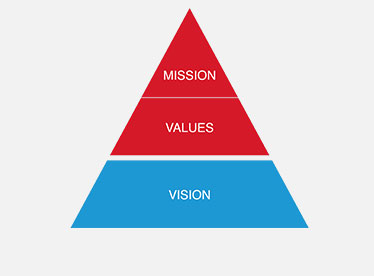
Since its foundation, Hitachi’s Mission has always been to “Contribute to society through the development of superior, original technology and products.”
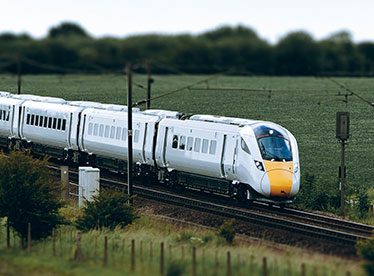
Hitachi has been a driving force behind much of the technological progress that has helped increase quality of life for people across the globe. Hitachi has been steadily growing its market share in dynamic sectors, including energy, railway systems, social infrastructure and a range of IT systems.
Furthermore, Hitachi has always worked to solve the most pressing challenges facing society through the development of social infrastructure technologies that raise quality of life. In recent years, Hitachi has contributed to achieving a sustainable society. With a history of pioneering new fields for innovation, Hitachi is now applying this legacy as it leads the charge for a more sustainable future.
It is only natural that the public-facing aspects of a business will remain front of mind for the majority of consumers, and there may still be people who perceive Hitachi primarily as an appliance company. Hitachi’s journey in the U.S. began in 1926 when Hitachi commenced trade by exporting 30 electric fans to the U.S. In the beginning, it was mainly from the export of infrastructure system products, and Hitachi America, Ltd. was established in 1959. Since then, Hitachi has expanded its sales and manufacturing operations as well as its partners and customers in the U.S. In the railway system business in the 1980s, Hitachi provided rolling stock trains to the Metropolitan Atlanta Rapid Transit Authority. Since the 1980s its automotive systems business has been providing products to GM and Ford. In 1989, Hitachi established Hitachi Data Systems as a joint venture with EDS (Electric Data Systems) to expand its IT business capabilities. Hitachi’s successful heritage and track record of innovation across a wide range of products and solutions helped the company gain a foothold in the U.S. from which it was able to build and gradually expand its business portfolio to include sustainable electrical grids, railway systems, and the digital transformation of social infrastructure and critical systems.
Hitachi has also focused on corporate citizenship activities in the United States. In 1985, the company established the Hitachi Foundation in Washington, D.C. The foundation was dedicated to solving problems facing American society in education, the arts, community economic activities and science while promoting mutual understanding between Japanese and American cultures.
As our business is part of society, we need to be a part of the ecosystem that supports a sustainable future. That’s why Hitachi started the Inspire STEM Education Outreach Program in 2011.
Carbon Neutrality by 2030
Unlike companies that specialize in one specific area, Hitachi leverages insight and experience from one sector to drive innovation and change across the rest of its operations – creating value for partners, customers and society at large.
Hitachi has a broad business portfolio that covers industrial equipment to social infrastructure systems, including energy and mobility solutions, social infrastructure like electrical grids and railway systems (all essential industries), and even digital IoT solutions. Since its founding over 110 years ago, Hitachi has placed an emphasis on the creative application of the latest technological breakthroughs to address macro trends for the betterment of society. Social Innovation is at the core of Hitachi’s business as the company works to create value for customers and society.
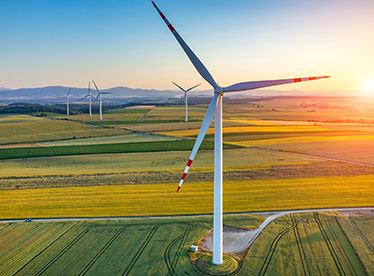
The Biden administration pledged to cut U.S. carbon emissions by at least half by 2030. Hitachi is deeply committed to our role as a climate change innovator and to decarbonization efforts in the U.S. Hitachi declared its intention to achieve carbon neutrality at its in-house business offices and production bases by fiscal year 2030. Together with its customers, it also aims to achieve carbon neutrality across its entire value chain by fiscal year 2050.
24,700+ Employees in the U.S.
In order to differentiate itself, Hitachi must draw increased attention to its unique culture of entrepreneurship, long and successful track record of innovation, and strong commitment to social impact.
Hitachi has more than 24,700 employees among its 72 Group companies in the U.S. and 19 R&D labs operating in 37 states, with revenues of $10 billion in North America (as of March 31, 2021). Its proven experience in global markets allows Hitachi to inspire the world.
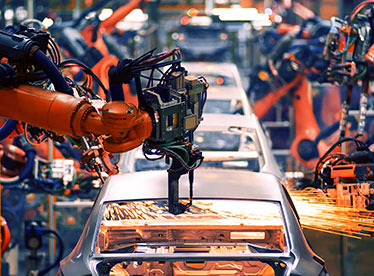
By adding key companies to its solutions portfolio for the U.S. market, Hitachi has strengthened its own R&D and digital capabilities. These companies include Sullair, a leader in compressed air solutions; JR Automation, a robot system integration company; Hitachi Energy, a global technology leader advancing a sustainable energy future for all; and GlobalLogic, a leading digital engineering company. Today, Hitachi is involved in developing technologies that address some of the world’s toughest challenges, including climate change and the development of resilient social infrastructure.